
TMS Therapy - FDA approved
What is TMS Therapy?
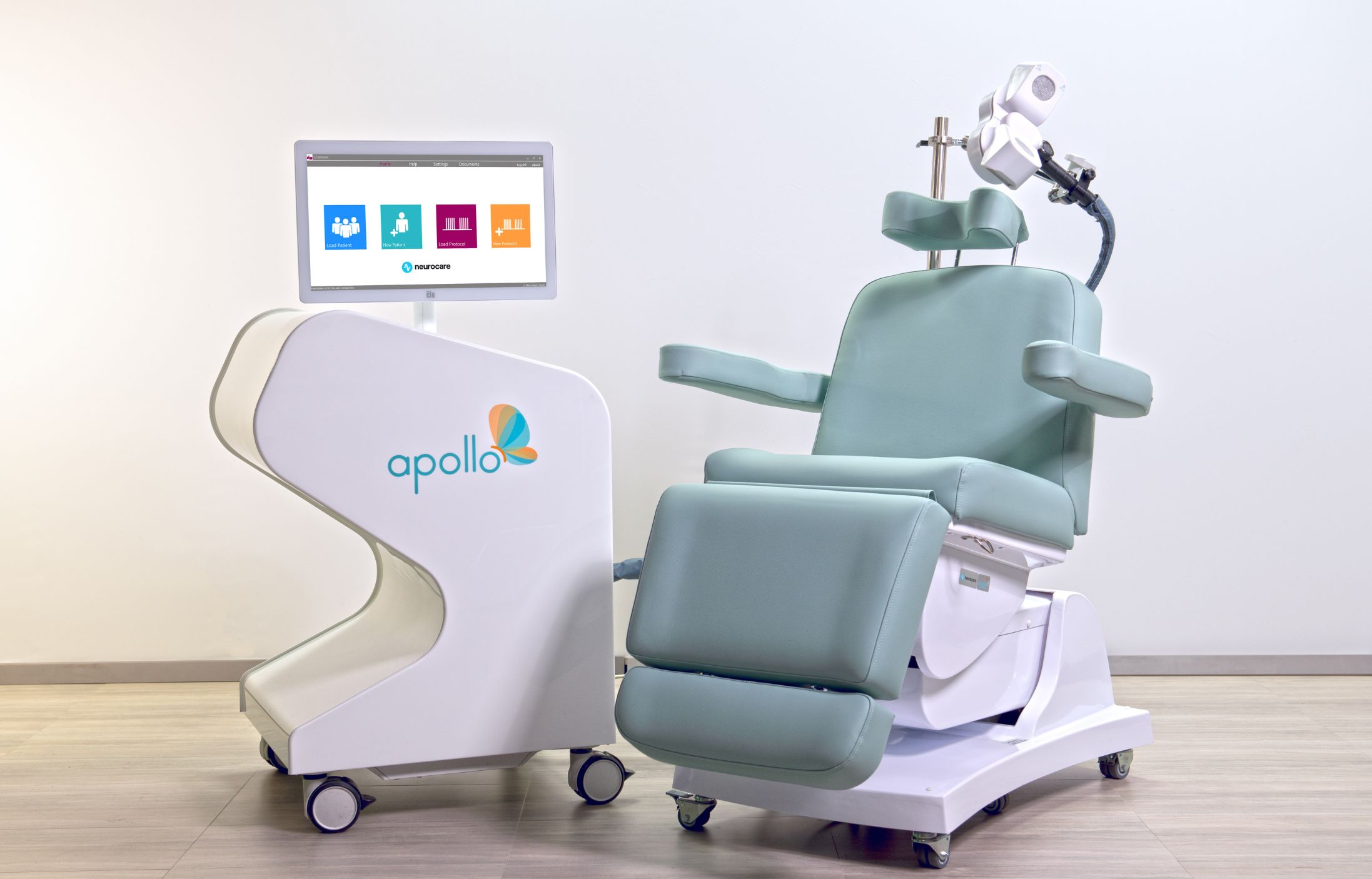
Trans-cranial Magnetic Stimulation (TMS) Therapy is an effective, safe and non-invasive treatment for depression and other mental health conditions. Apollo TMS Therapy is FDA approved to treat depression and TMS Therapy can be used to treat anxiety disorders.
How does TMS work?
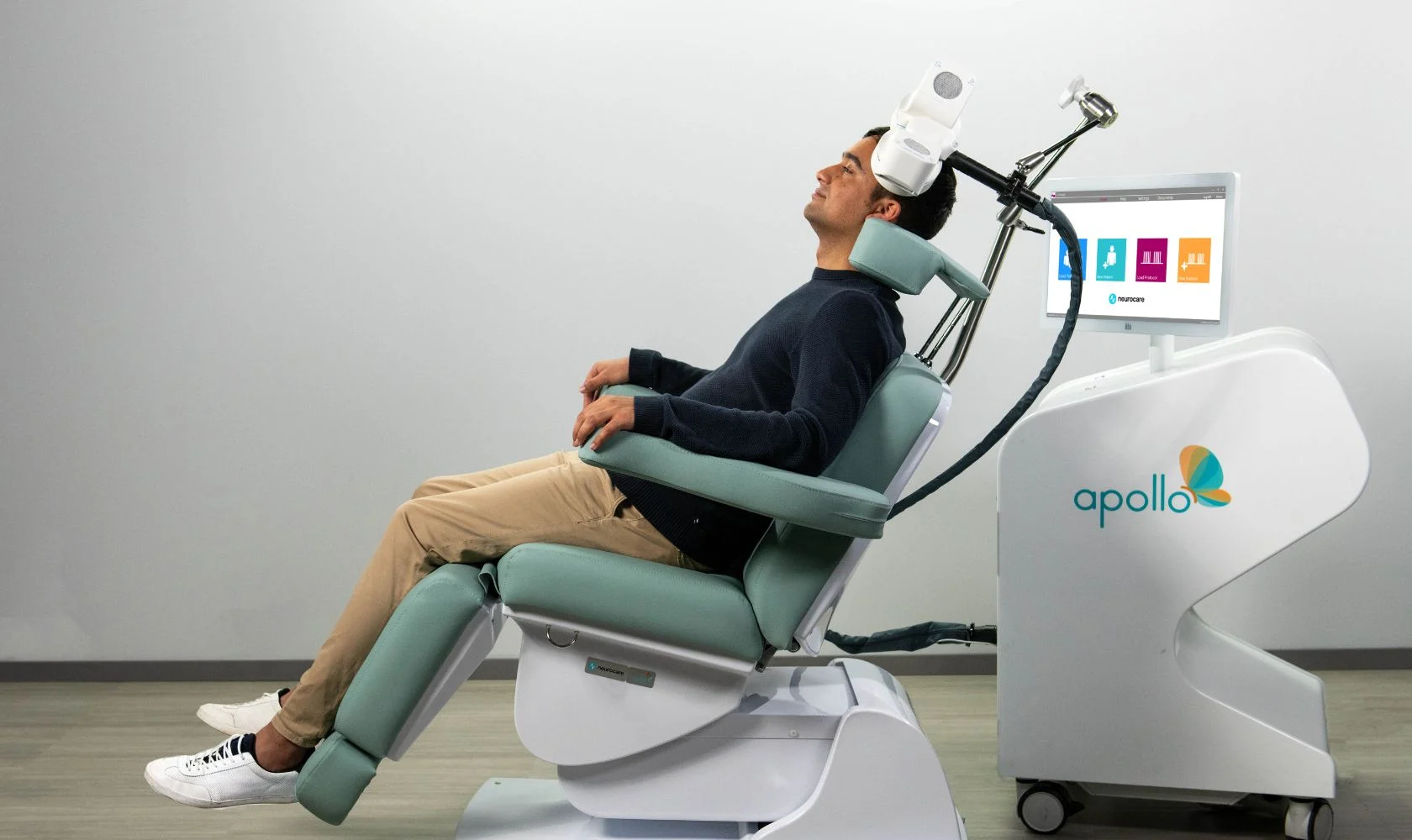
Magnetic pulses are delivered to certain areas of the brain to stimulate or regulate nerve cells that are associated with mood regulation. At Options Psychiatry, we use the state of the art Apollo TMS Therapy system.
What should I know about TMS Therapy?
- TMS is effective for those who do not respond to medications or therapy.
- TMS treatment is performed in the office, with no anesthesia.
- TMS therapy has minimal side effects.
- TMS is almost double in efficacy compared to medications.
- TMS uses magnetic energy to treat mental health conditions, not chemicals.
- TMS is covered by many insurance carriers, including Medicare.
What does it feel like?
TMS Therapy in Reading uses pulses that can affect the activity of your neurons over a certain period of times. Quite simply, a repetitive tapping sensation is felt on your forehead that occurs during treatment. As a patient continues TMS, they acclimate to the pulses with little to no problems at all. Treatment is tolerable and the Options Psychiatry team is focused on making you are always comfortable.
Why should you consider TMS Therapy in Reading?
Someone should consider TMS Therapy in Reading PA if they are struggling with depression or other mental health conditions that have not improved with traditional treatments like talk therapy or medication. TMS is a non-invasive, drug-free option that targets specific areas of the brain involved in mood regulation, offering relief for individuals who have experienced limited success with other approaches.
TMS-Therapy is safe, well-tolerated, and has minimal side effects. It is an appealing option for those seeking an effective, long term solution to improve their mental health and quality of life. Mental health treatment is a process and we have an option for you. If you're sick of medications and need to try something different, give us a call.
How much does TMS Therapy cost?
TMS therapy is covered by insurance for certain FDA-approved conditions, such as depression. At Options, we accept most commercial insurance plans and Medicare to help cover your treatment. Depending on your insurance plan, co-pays or co-insurance costs may apply and will be the patient’s responsibility. Since coverage varies by plan, our team will verify your benefits and eligibility, providing you with detailed information about your coverage, approval status, and any out-of-pocket costs. We are committed to making this life-changing treatment more affordable and accessible for our patients. Contact us today to learn more.
What if I don't have insurance or it doesn't cover TMS for me?
At our practice, we believe everyone deserves access to life-changing care. That’s why our team at Options is committed to offering flexible self-pay pathways for TMS therapy, designed to make treatment as accessible and stress-free as possible. Our packages are comprehensive and include everything you need to begin your TMS journey, and our team is always available to talk through the details at a pace that feels right for you.
If transportation is a concern, we can also help coordinate convenient options to ensure you’re able to attend your sessions consistently and comfortably. Just let us know your situation, and we’ll work with you to find the best solution. At Options, our goal is simple: to meet you where you are and support you every step of the way. Let’s connect and explore the pathway that feels right for you.
Let's try a different option.
If you’re exploring TMS treatment options, our specialists are here to guide you through every step with clarity and care. Schedule a consultation today and discover the safest, most effective path toward long-term mental wellness.
frequently asked questions
TMS can offer long-lasting relief from depression, especially for those who respond well to treatment. While some individuals experience years of symptom reduction, others may need maintenance sessions. Outcomes vary, but TMS often leads to significant and enduring improvements when combined with therapy or medication.
Most patients undergo 5 sessions per week for 4 to 6 weeks, totaling 20–30 treatments. Your exact number may vary based on severity and how you respond to TMS Therapy in Reading. Maintenance sessions may follow, depending on your mental health goals and clinical advice.
TMS is non-invasive and generally not painful. Some people feel mild scalp discomfort or tapping sensations during sessions, especially early on. These side effects usually fade as the treatment progresses and are well-tolerated by most patients.
Many insurance providers cover TMS for treatment-resistant depression. Coverage varies, so it's best to verify details with your provider or have the clinic assist with insurance checks.
A single TMS session typically costs between $250 and $500 without insurance. However, many insurance plans now cover TMS Therapy in Reading for FDA-approved conditions like major depressive disorder, significantly reducing out-of-pocket costs.
TMS is FDA-approved for adults aged 18 and older. While research is ongoing, it's not commonly used in children or teens under 18. Older adults can benefit as long as there are no contraindications based on medical history.
Common side effects include mild scalp discomfort, headache, and lightheadedness that may occur during or after sessions. Serious side effects are rare, though there’s a very low risk of seizures. TMS is generally safe and well-tolerated, particularly when compared to the side effects of medication.
TMS can provide long-lasting improvements, with many patients maintaining results for months or even years. Some may return for maintenance sessions if symptoms recur.

Options provides education, support, and therapeutic options to those who are suffering from mental health disorders and symptoms. Our focus on TMS Therapy, Medications & Counseling helps us provide comprehensive and quality care.
QUICK LINKS
CONTACT INFO
OFFICE HOURS
Monday
9:00 AM - 5:00 PM
Tuesday
9:00 AM - 5:00 PM
Wednesday
9:00 AM - 5:00 PM
Thursday
9:00 AM - 5:00 PM
Friday
9:00 AM - 5:00 PM
Saturday
Closed
Sunday
Closed
© Copyright 2026 Options Addiction & Recovery