

Depression is more than just feeling low, it’s a condition rooted in how your brain functions. While medications and therapy help many people, others continue to struggle despite trying multiple treatments.
That’s where Transcranial Magnetic Stimulation (TMS) offers a breakthrough.
At Options Psychiatry in Reading, PA, TMS therapy is helping patients find relief by directly targeting the brain circuits responsible for mood. If you’re exploring alternatives, it’s important to first understand how TMS therapy works and why it’s so effective.
What Is TMS Therapy?
Transcranial Magnetic Stimulation (TMS) is a non-invasive, FDA-approved treatment that uses magnetic pulses to stimulate areas of the brain involved in mood regulation.
Unlike traditional approaches, TMS:
- Does not require medication
- Does not involve surgery
- Targets specific brain regions
- Has minimal side effects
If you’re considering treatment, you can learn more about TMS therapy in Reading, PA and how it’s performed at Options Psychiatry.
The Science Behind Depression
Depression isn’t just a chemical imbalance, it’s also a brain circuit disorder.
Key changes in the brain include:
- Reduced activity in the prefrontal cortex
- Poor communication between mood-regulating regions
- Disrupted neural pathways
This is why some patients don’t respond fully to medication alone.
If you’ve struggled with medications, exploring non-medication depression treatment options like TMS can be a game changer.
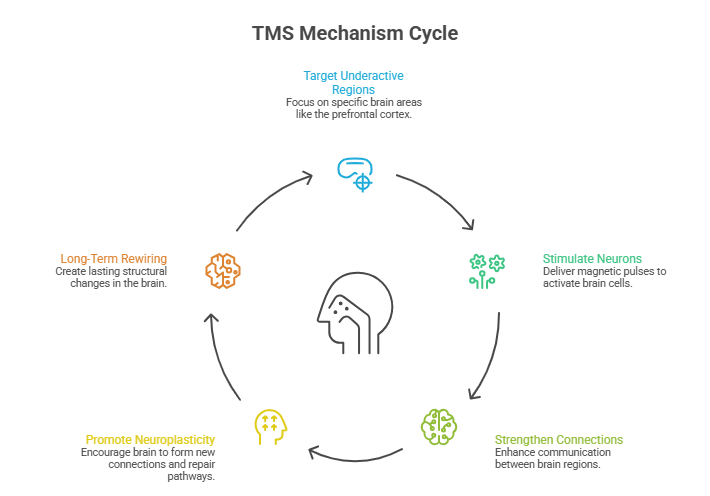
How Does TMS Work? (Step-by-Step)
1. Targeting Underactive Brain Regions
TMS focuses on the left dorsolateral prefrontal cortex, an area responsible for mood regulation that is often underactive in people with depression.
2. Magnetic Pulses Stimulate Neurons
A magnetic coil placed on your scalp delivers pulses that:
- Safely pass through the skull
- Activate brain cells
- Trigger electrical activity
This process essentially “wakes up” areas of the brain that are not functioning properly.
3. Strengthening Brain Connections
With repeated sessions, TMS helps strengthen communication between different parts of the brain.
This leads to:
- Improved emotional control
- Better cognitive function
- Reduced depressive symptoms
4. Promoting Neuroplasticity
TMS encourages neuroplasticity, allowing the brain to:
- Form new connections
- Repair damaged pathways
- Build healthier activity patterns
This is one reason why many patients see long-term improvement compared to traditional treatments.
5. Long-Term Brain Rewiring
Unlike medications that temporarily adjust brain chemistry, TMS helps create lasting structural changes.
What Happens During a TMS Session?
At Options Psychiatry, TMS sessions are simple and comfortable.
Here’s what to expect:
- You sit in a relaxed chair
- A magnetic coil is positioned on your head
- You’ll feel a tapping sensation
- No anesthesia or downtime is required
Treatment Plan:
- 20–40 minutes per session
- 5 sessions per week
- 4–6 weeks total
Ready to begin? You can schedule a TMS consultation to see if this treatment is right for you.
When Will You See Results?
TMS works gradually as your brain adapts.
Typical timeline:
- Week 1–2: Subtle improvements
- Week 3–4: Noticeable mood changes
- Week 5–6: Significant relief
Many patients who previously explored the cost of TMS therapy find the long-term benefits outweigh the investment.
Benefits of TMS Therapy
- Drug-free treatment
- Minimal side effects
- No downtime
- High success rate for treatment-resistant depression
- Long-lasting results
Learn more about insurance coverage for TMS therapy to understand affordability options.
Side Effects and Safety
TMS is generally well tolerated.
Common side effects:
- Mild scalp discomfort
- Headache
- Tingling sensation
These effects are temporary and usually improve after a few sessions.
Who Is a Good Candidate for TMS?
You may benefit from TMS if you:
- Have not responded to antidepressants
- Experience unwanted medication side effects
- Want a non-invasive treatment option
- Have been diagnosed with depression
Is TMS Covered by Insurance?
Yes, most major insurance providers cover TMS therapy for depression.
Requirements may include:
- Diagnosis of Major Depressive Disorder
- Previous medication trials
- Clinical documentation
TMS vs Other Treatments
| Treatment | Approach | Limitation |
|---|---|---|
| Medication | Chemical | Side effects |
| Therapy | Behavioral | Time-intensive |
| TMS | Brain stimulation | Requires sessions |
| ECT | Electrical (sedated) | Invasive |
See a detailed comparison in our TMS vs medication guide.
Real-Life Benefits of TMS
Patients often report:
- Improved mood
- Better focus
- Increased motivation
- Renewed interest in daily life
For many, TMS provides hope after years of unsuccessful treatments.
Frequently Asked Questions (FAQs)
1. Does TMS therapy hurt?
TMS therapy is generally well tolerated and not considered painful. Most patients describe the sensation as a light tapping or pulsing feeling on the scalp during treatment. You may feel mild discomfort during the first few sessions, but this typically decreases as your body adjusts. Your provider can also adjust the intensity to ensure maximum comfort.
2. How long do results last?
Many patients experience long-lasting relief from depression symptoms after completing a full course of TMS therapy. Results can last for months or even years, depending on the individual. In some cases, maintenance sessions may be recommended to sustain results. You can learn more about long-term outcomes when exploring the best TMS therapy clinic in Reading, PA.
3. Is TMS better than medication?
TMS is not necessarily a replacement for antidepressants, but it is often more effective for individuals who haven’t responded well to medication. Unlike antidepressants, which affect the entire body, TMS directly targets specific brain regions responsible for mood regulation. Many patients consider it a strong alternative when looking for non-medication depression treatment options.
4. Can I return to normal activities after treatment?
Yes, one of the biggest advantages of TMS therapy is that there is no downtime. You can drive yourself to and from appointments and return to work or daily activities immediately after each session. This makes it a convenient option for people with busy schedules.
5. Is TMS therapy safe?
Yes, TMS therapy is FDA-approved and backed by extensive clinical research. It has been proven to be safe and effective for treating depression, particularly in cases where other treatments have failed. Side effects are typically mild and temporary. For more details, you can read about TMS therapy side effects and safety.
6. How do I get started?
The first step is to book a consultation with a TMS specialist.
Conclusion
TMS therapy is redefining how depression is treated, by focusing on the brain itself rather than just symptoms. Through targeted stimulation and neuroplasticity, it helps restore healthy brain function and deliver lasting relief.
If you’ve tried everything and still feel stuck, TMS could be the breakthrough you’ve been waiting for. Take the next step and schedule your TMS consultation with the best psychiatrist in Reading, PA to start your journey toward better mental health.